Guide
Crochet loop placement changes texture and movement
See where front, back, and both loops sit—and what the unworked loop contributes to the fabric.
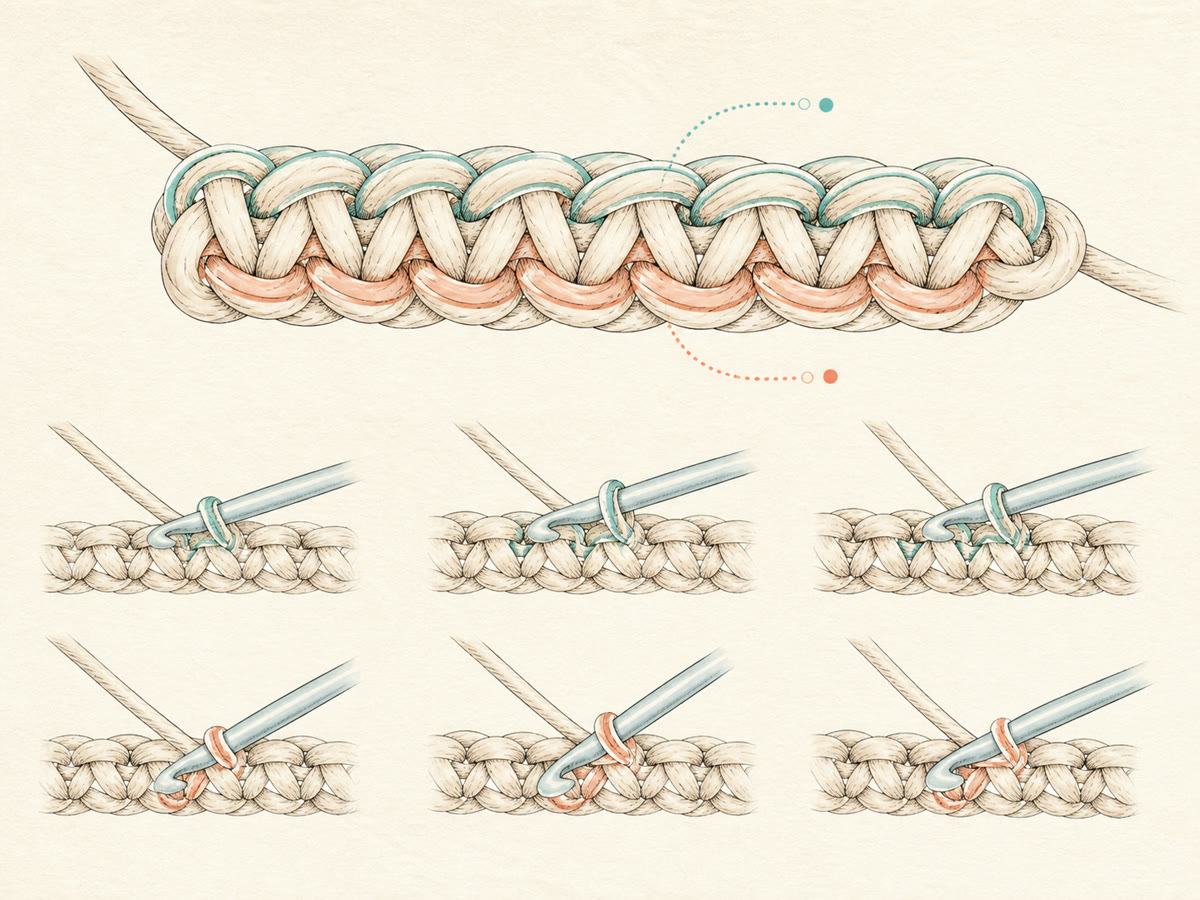
The top of a stitch has two loops
Viewed from above, the head of a crochet stitch resembles a V. The loop nearest you while working is the front loop; the farther loop is the back loop. Unless a pattern says otherwise, standard instructions generally mean inserting under both. When work is turned, the near and far relationships change with your viewing position, so identify the stitch from the current working side.
Leaving one loop changes the surface
Working through only one loop leaves the other loop unworked and visible as a horizontal ridge. Back-loop-only rows often create flexible corrugation and are widely used for crochet ribbing. Front-loop-only placement puts the ridge on the opposite relationship to the working face. The result still depends on stitch family, direction, yarn, and whether rows are turned.
Placement also affects structure
One-loop insertion uses less of the stitch head and can move differently under load than both-loop insertion. Use it deliberately rather than as an invisible substitution. On shaping rows, count the unworked ridge separately from the actual stitch top, and mark the first stitch if the edge becomes hard to read. Explore the top view below before checking both faces of a real swatch.
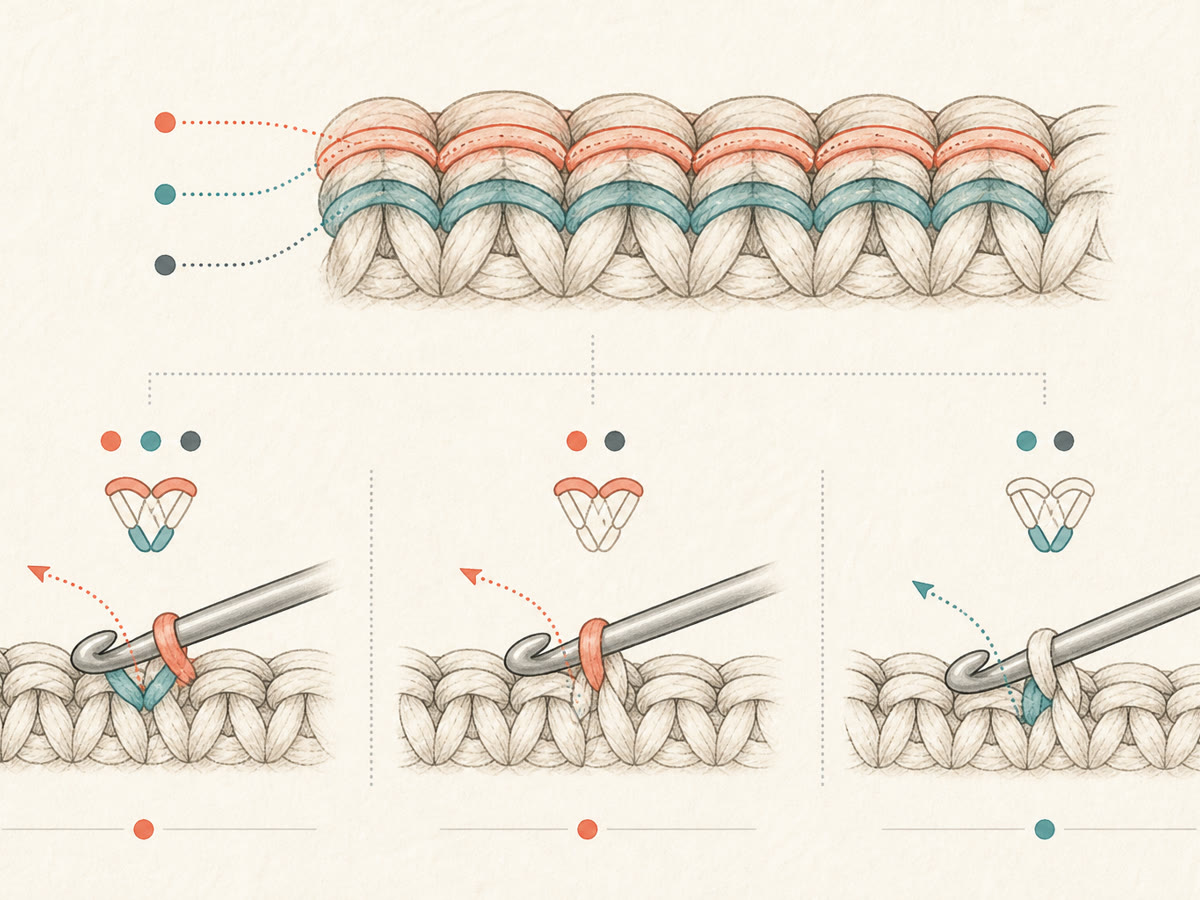
Interactive figure
Choose where the hook enters the stitch
View the top of a crochet stitch and highlight both loops, the front loop, or the back loop.