Guide
Embroidery tension: separate hoop tension from stitch tension
Keep the ground evenly supported while letting the working thread sit without distorting the fabric.
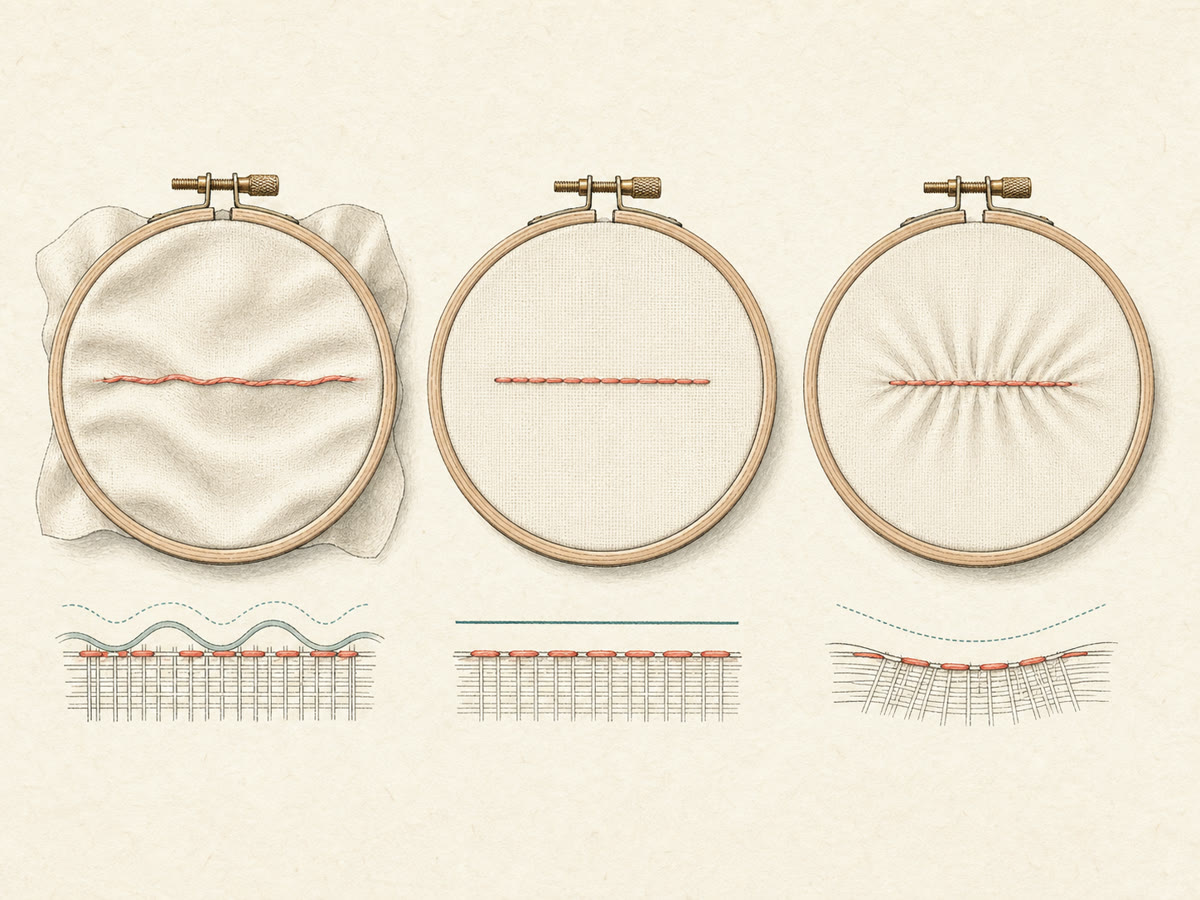
Two tensions do different jobs
Hoop or frame tension supports the ground fabric; stitch tension places the working thread. A slack ground moves with the needle and makes placement inconsistent. An evenly taut ground gives a stable reference. The working thread should then settle onto that surface rather than pulling it inward. Tight stitches can pucker even a well-framed fabric.
Adjust the ground evenly
Place the grain straight before tightening the outer ring. Smooth and pull gently in vertical and horizontal directions around the hoop rather than tugging diagonally at isolated corners. Recheck that woven threads remain straight and motifs have not stretched. Some techniques and delicate grounds need different framing or protective binding, so treat tautness as controlled support, not maximum force.
Diagnose before undoing
If the line waves before stitching, improve ground support. If the fabric draws toward completed stitches, reduce working-thread tension and check thread bulk, needle size, and stitch density. If marks remain after removing the hoop, test the ground and avoid leaving vulnerable fabric clamped longer than necessary. The illustration exaggerates each state so the cause is easier to distinguish.
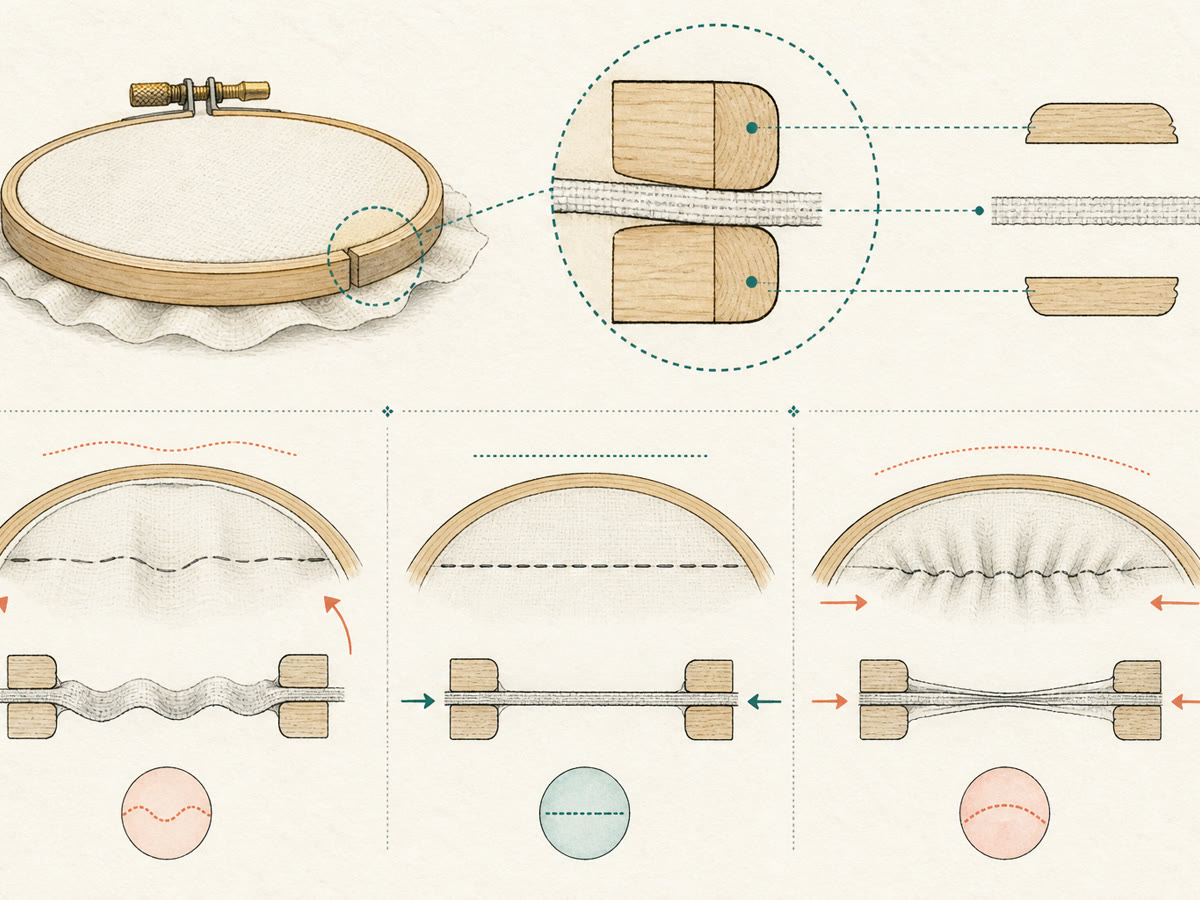
Interactive figure
See what fabric and thread tension change
Compare a slack ground, an evenly supported ground, and thread pulled tightly enough to pucker it.