Guide
Gauge is a fabric measurement, not a needle promise
Understand why the same needle and yarn can produce different dimensions, and how a representative, finished swatch turns a chart into a reliable size.
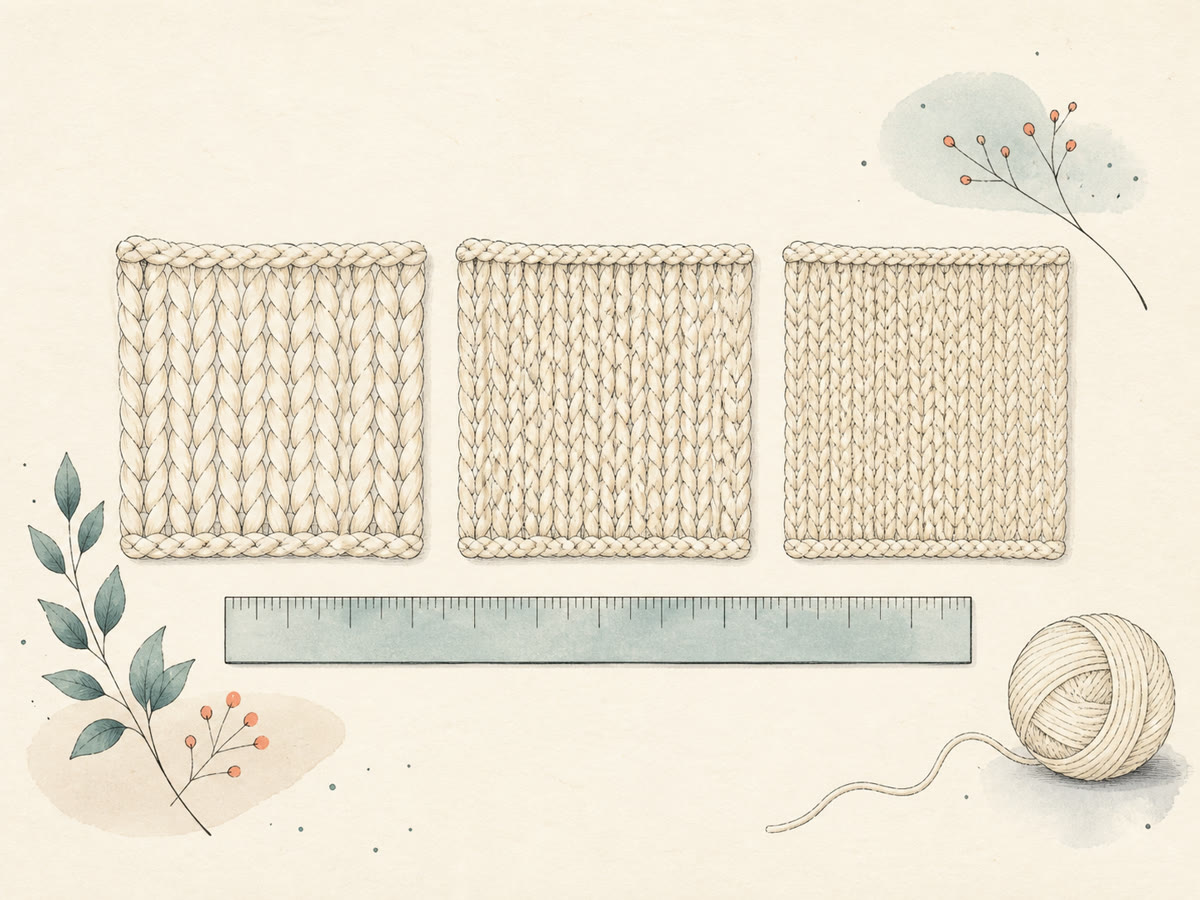
Measure the fabric you will actually make
Gauge records stitches and rows over a known distance, commonly 10 cm. Needle size is only one input. Fibre, yarn construction, stitch pattern, working flat or in the round, personal movement, and washing can all change the result.
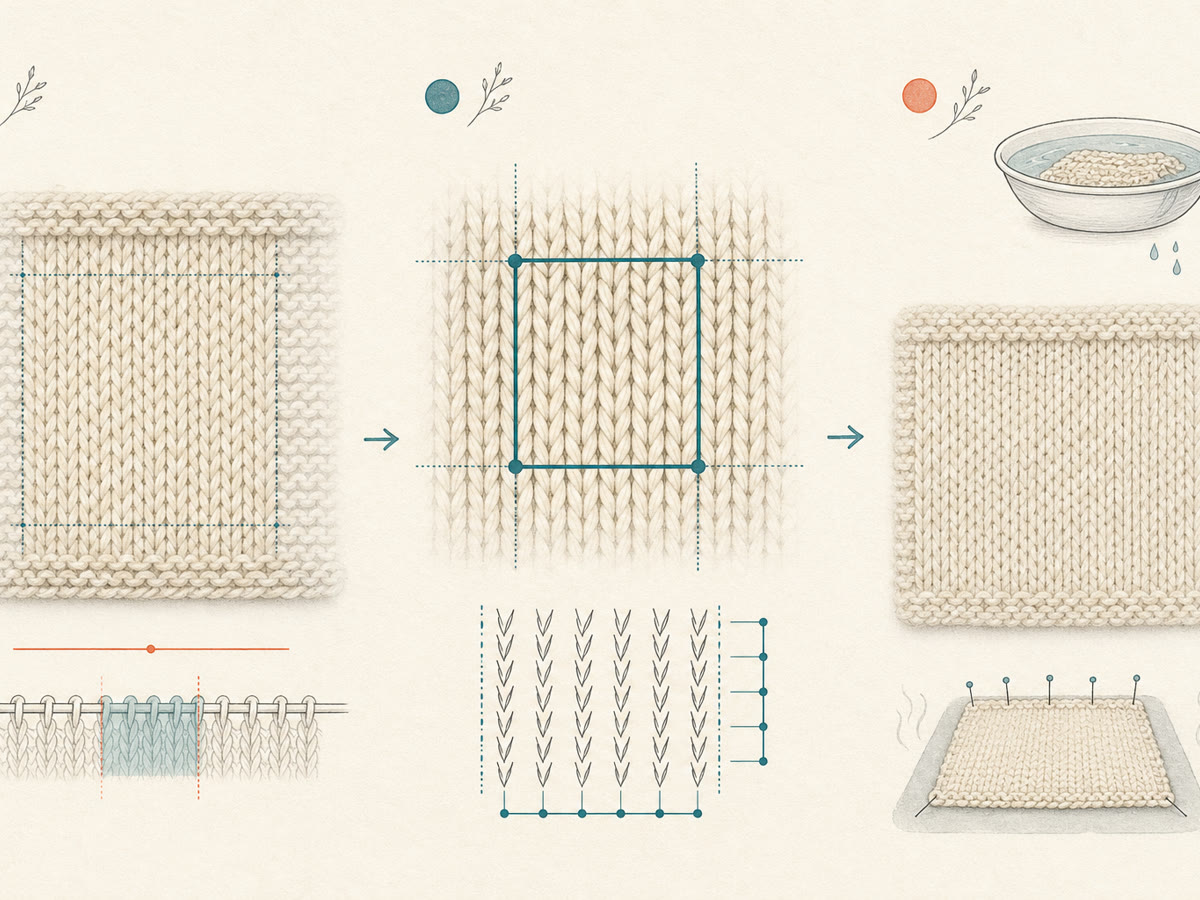
Make a representative swatch
Use the project yarn, stitch pattern, tool, and construction method. Make the sample larger than the measuring area so edge stitches do not distort the count. Finish it as the project will be finished, let it rest, and measure several central areas without stretching. Record stitch gauge, row gauge, needle diameter, and the fabric’s feel.
Adjust from evidence
Too few stitches across the target width means each stitch is too large; try a smaller needle. Too many means each stitch is too small; try a larger needle. The relationship is not perfectly linear, so make and finish another swatch. Row gauge matters wherever shaping is specified by rows.
The figure keeps the width fixed while changing the stitch count.
Interactive figure
See how stitch density changes fabric
Move the control to compare the same 10 cm width at different stitch counts. More stitches create smaller loops and a denser surface.