Guide
Plan and join crochet motifs into a finished project
Measure the joined repeat, plan rows and columns, arrange colour, and test a seam before assembling many motifs.
Measure the module you will actually repeat
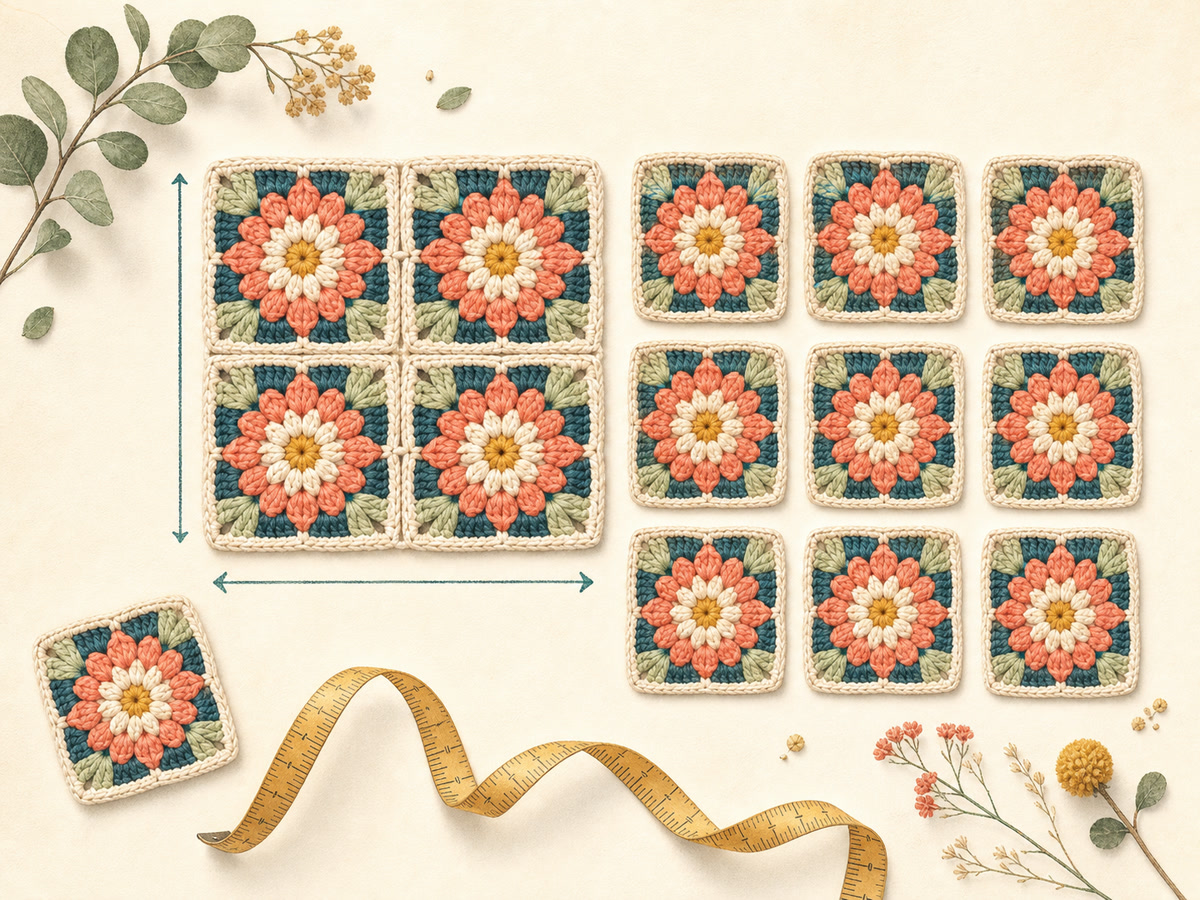
Make representative motifs with the project yarn and hook, finish their ends as the pattern requires, and block them consistently. Join at least two in each direction with the intended seam, then measure the joined centre-to-centre repeat rather than assuming that one loose square equals one finished module. The seam can add width, draw edges inward, or change how the fabric hangs. Record both axes; a square-looking motif is not always square after finishing.
Turn the target into a deliberate layout
Divide the desired finished width and height by the measured joined repeat and round each axis up to complete motifs. The Motif layout planner performs that aligned rectangular calculation and can add a small make allowance after the grid count. Borders and edging are separate from the motif field, so swatch them before subtracting their depth. Use the pattern schematic for staggered, diagonal, hexagonal, or half-motif layouts because a simple row-by-column model does not describe them honestly.
Arrange colour before joining
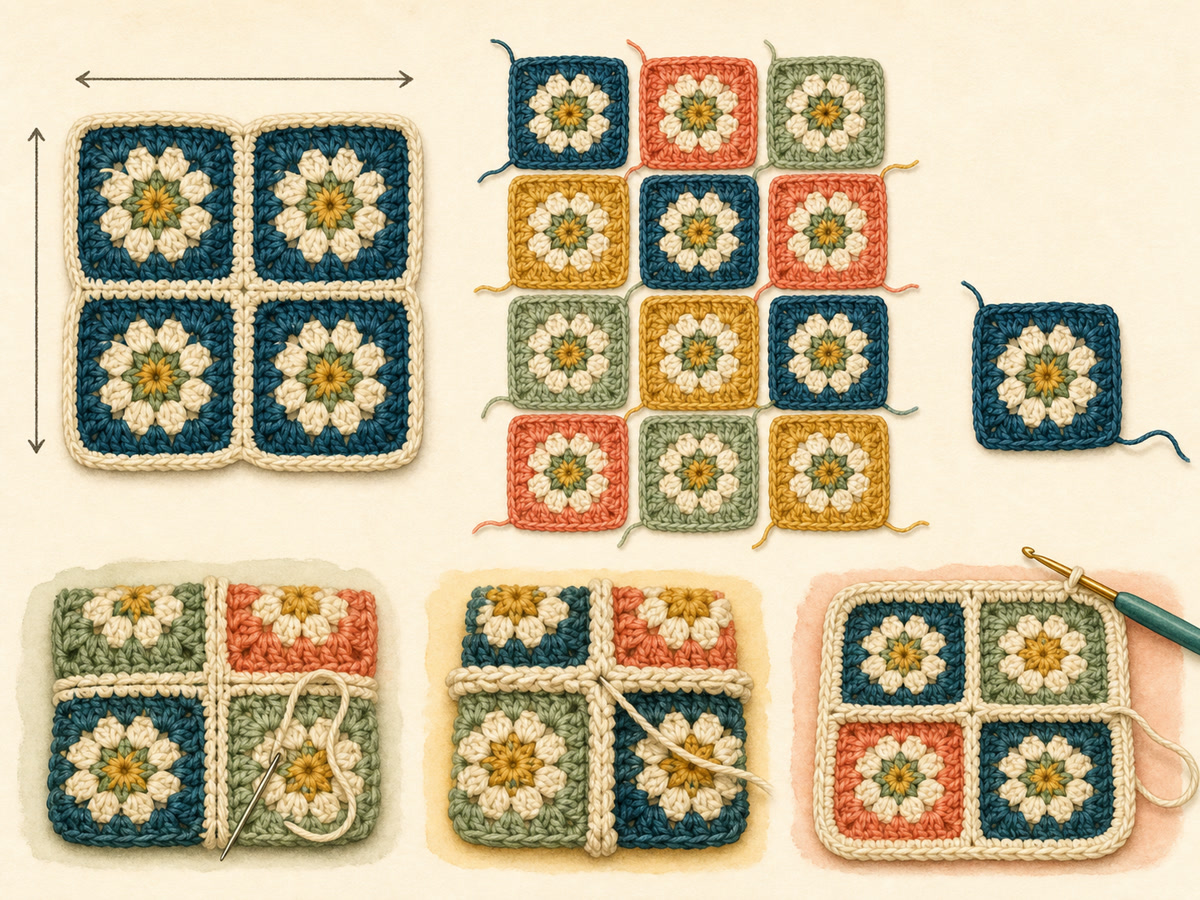
Lay every finished motif out in its planned orientation, photograph the arrangement, and label rows or stacks so the order survives handling. Check colour balance from a distance and rotate directional motifs consistently. A published afghan may specify both a motif gauge and an exact rows-by-columns assembly plan; treat those as linked instructions, not independent suggestions. Make any spare motifs in useful project colours instead of counting them into the planned grid.
Sample the join as part of the fabric
A sewn join can stay relatively flat and flexible, while slip-stitch or single-crochet joins can create a visible ridge and firmer structure. Join-as-you-go connects motifs during a final round and changes the assembly sequence. Work a small joined sample, stretch it in the directions the project will be used, and inspect the right and wrong sides before committing. Keep loop choice, seam tension, corner handling, and yarn tails consistent; join strips into larger sections and recheck dimensions and diagonals as you go.