Guide
Reading crochet charts: symbols, rows, rounds, and repeats
Treat a chart as a map of stitch placement: identify the key, starting point, direction, and repeat boundary before following individual symbols.
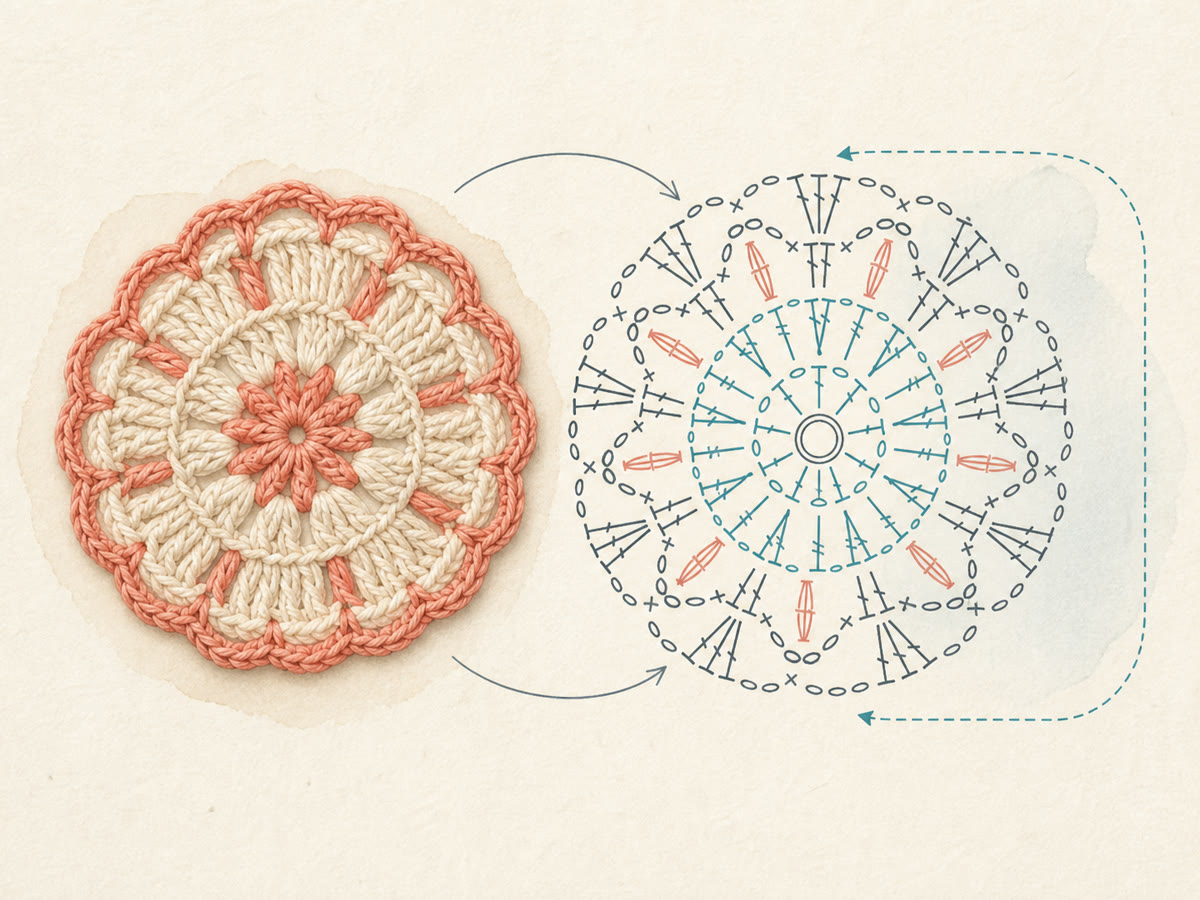
A symbol says what and where
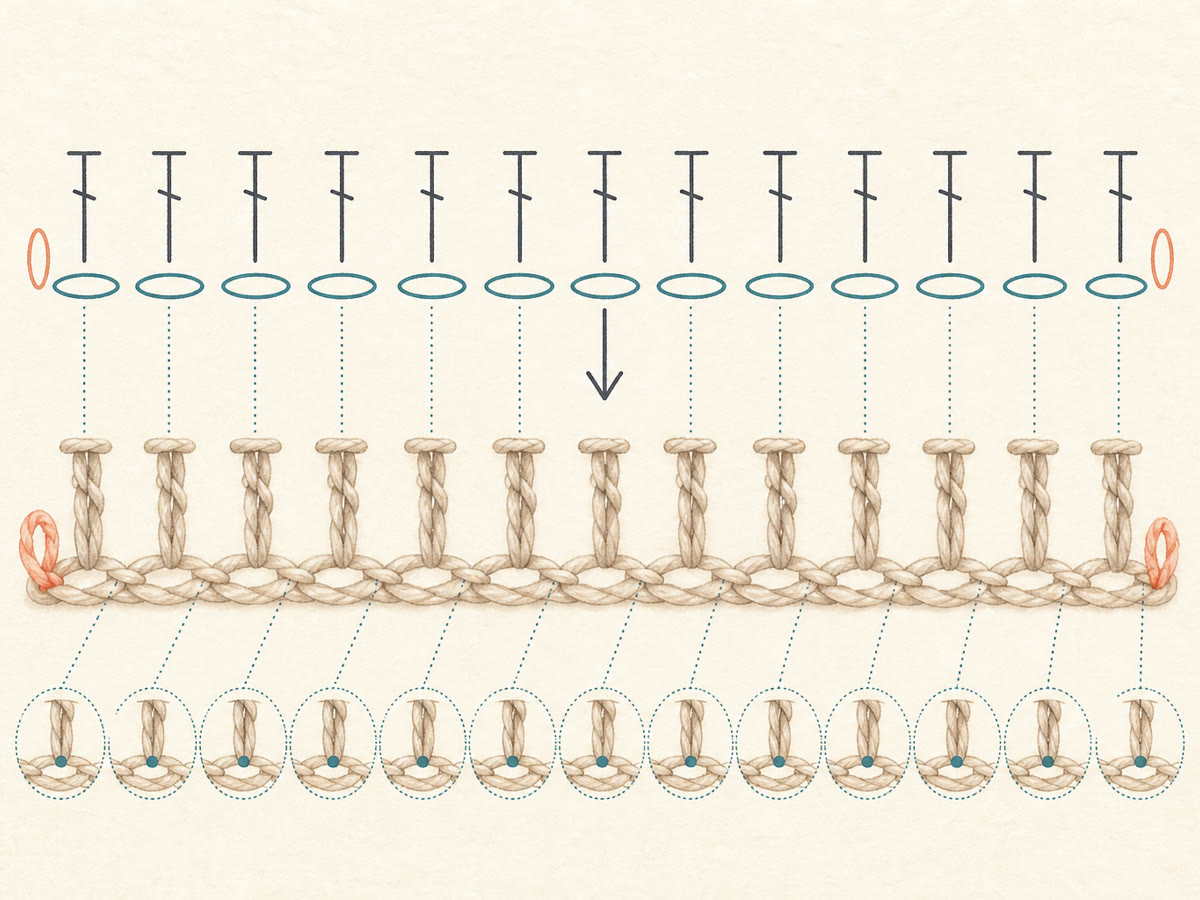
Crochet symbols visually resemble the stitches they represent. The key defines their meaning; always use the key supplied with the pattern because special symbols vary. Placement is equally important: a symbol’s base points to the stitch or space where it is worked, while grouped symbols show several stitches sharing an insertion point.
Establish the route first
For work in rows, locate row numbers and turning chains, then follow the direction shown by the chart. Direction commonly alternates as the work turns. A chart in rounds grows outward from its centre or foundation ring and normally keeps travelling around the motif. Mark the beginning of each round.
Separate repeat from edge stitches
A bracket, outline, colour field, or written note can mark the repeat. Work any setup symbols before it, repeat only the enclosed sequence, then finish with the edge symbols after it. Compare the chart with the written stitch count at the end of a row or round; disagreement is a signal to stop early.
Move through the small chart below one row at a time.
Interactive figure
Trace the route through a crochet chart
Change construction and row to practise direction before reading the stitch symbols.