Guide
Embroidery needles: match the point and eye to the work
Compare crewel, tapestry, and chenille needles by point, eye, shaft, ground fabric, and thread instead of relying on the name alone.
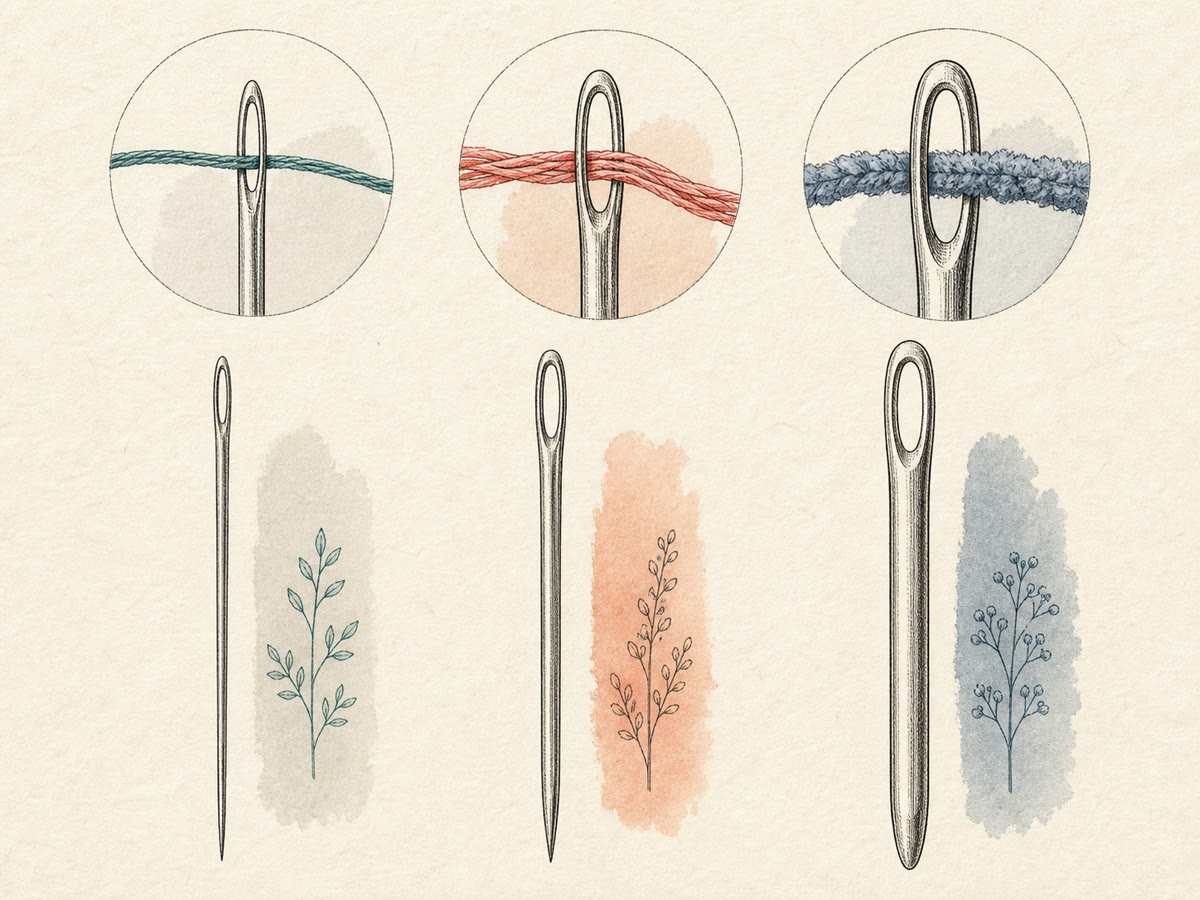
Choose the path through the ground
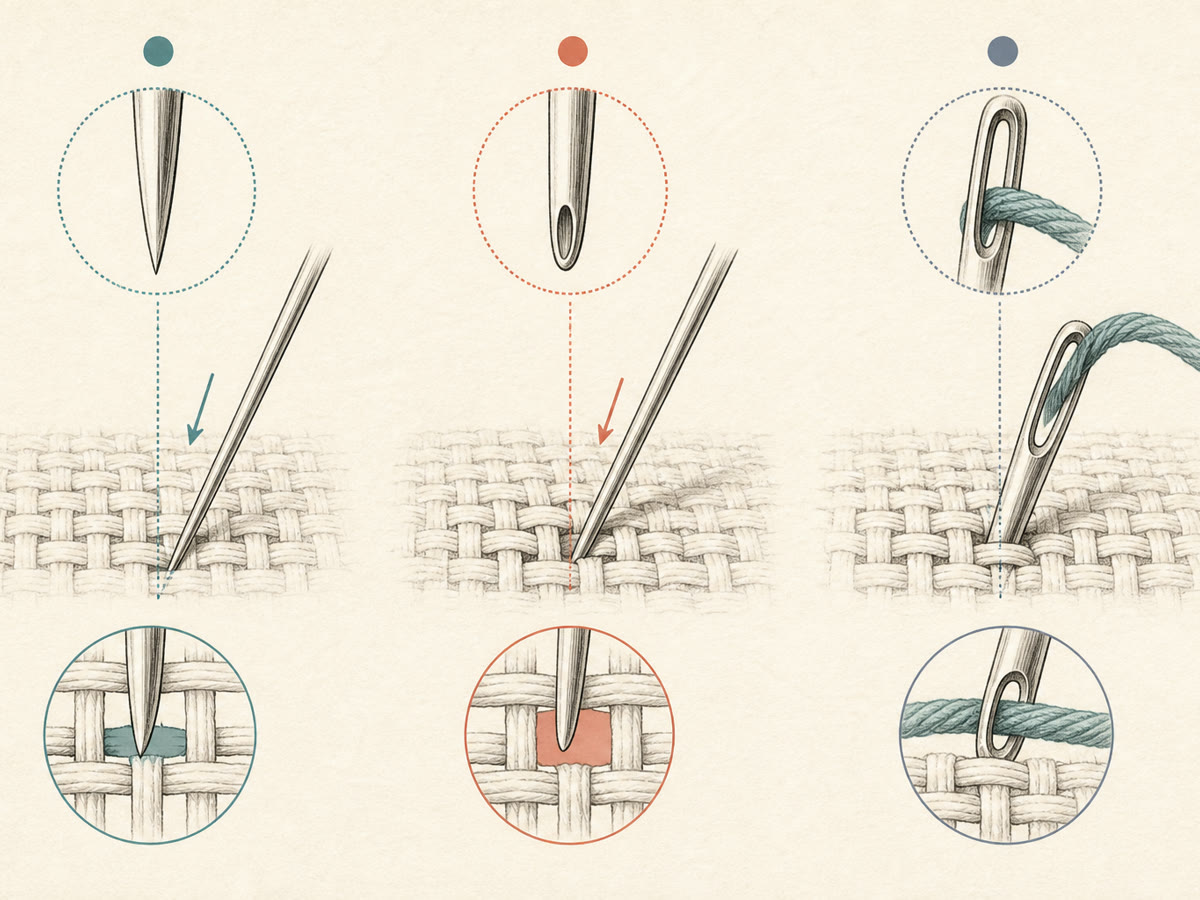
A surface-embroidery stitch usually pierces the ground, so a sharp point is useful. Counted work normally passes between visible threads or through established holes, where a blunt tapestry point avoids splitting the ground. The needle should open a path large enough for the working thread without leaving a persistent hole.
Three useful families
Crewel or embroidery needles have a sharp point and an elongated eye for stranded cotton, silk, or fine wool on closely woven grounds. Tapestry needles combine a blunt point with a large eye for cross stitch, canvaswork, and other counted techniques. Chenille needles have a similarly long, large eye but retain a sharp point, allowing bulkier thread or ribbon to pierce felt, wool, denim, or close weave.
Numbers are family-specific
Within many hand-needle families, a higher number means a finer needle, but ranges differ between families. Compare the named type, physical diameter, eye, and point—not just the number. Discard a bent, rough, or burred needle before it damages thread or fabric.
Switch the figure to compare the three profiles.
Interactive figure
Compare point, eye, and shaft
Switch needle family to see which path it opens for the working thread.