Guide
Yarn twist and ply: structure before stitch
Read a yarn as a structure of fibres and singles so you can anticipate cohesion, surface, stitch definition, and the difference between ply count and thickness.
Twist makes fibres cohere
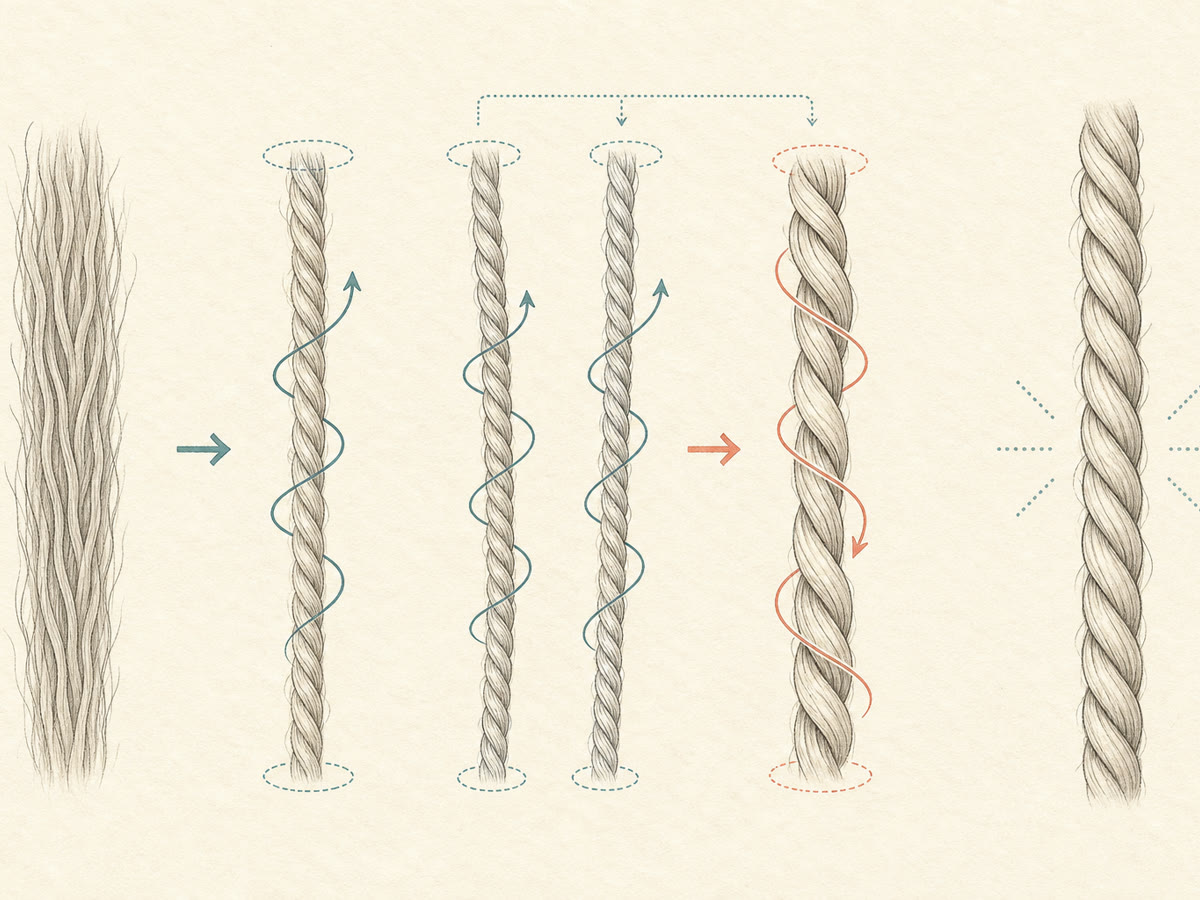
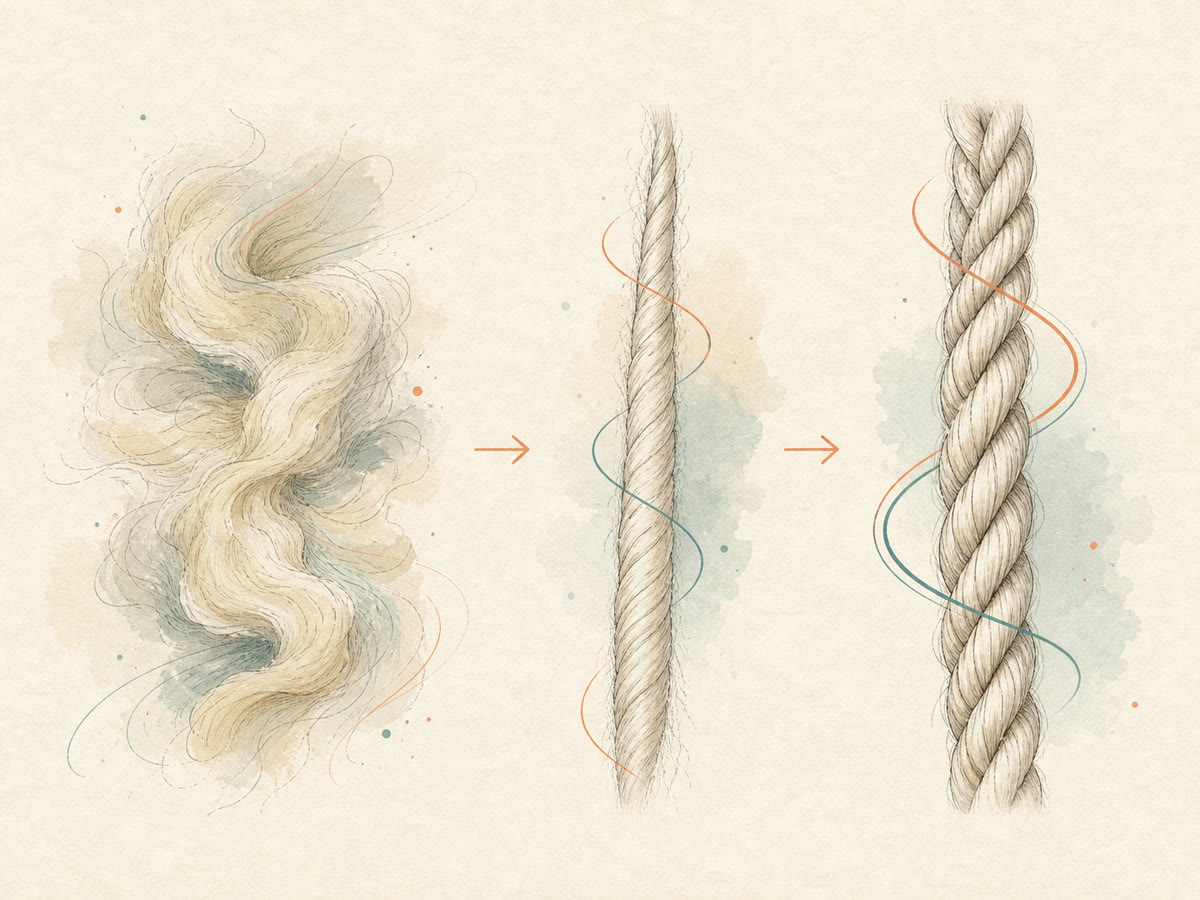
Spun yarn uses twist and the friction it creates to hold staple fibres together. Looking along a single, fibres that slope like the centre of the letter S have S twist; those that slope like Z have Z twist. Direction alone is not a quality grade, but it can interact with the direction of plying and with the motions of a craft.
Ply is construction, not weight
A plied yarn twists two or more singles together. Two yarns can have the same finished diameter while one is a single and the other is multi-ply, because the component singles differ in size. Ply count therefore does not reliably state yarn weight. Plying can improve uniformity and balance torque, while round multi-ply constructions often make textured stitches read clearly. A softly twisted single may bloom into a blended surface but abrade or split more readily.
Sample the behaviour you need
Untwist a short end only far enough to inspect construction. Then make a small sample using the intended hook, needles, or embroidery stitch. Watch for splitting, bias, abrasion, drape, and how light catches ridges. Wash before judging bloom and balance.