Guide
Wool crimp, moisture, and static charge
Connect wool’s wavy, layered fibre structure with elasticity and moisture response—and understand why dry air can change static behaviour.
Crimp is a three-dimensional spring
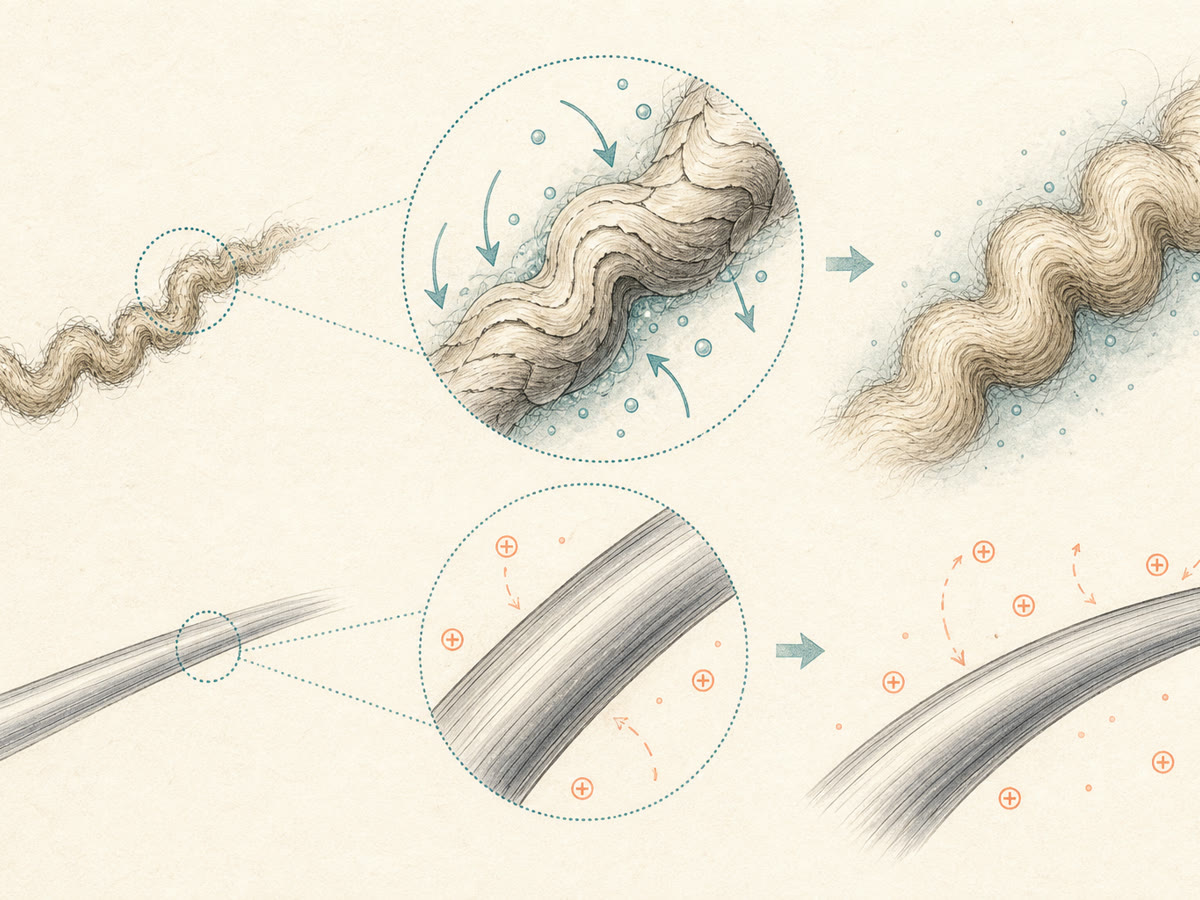
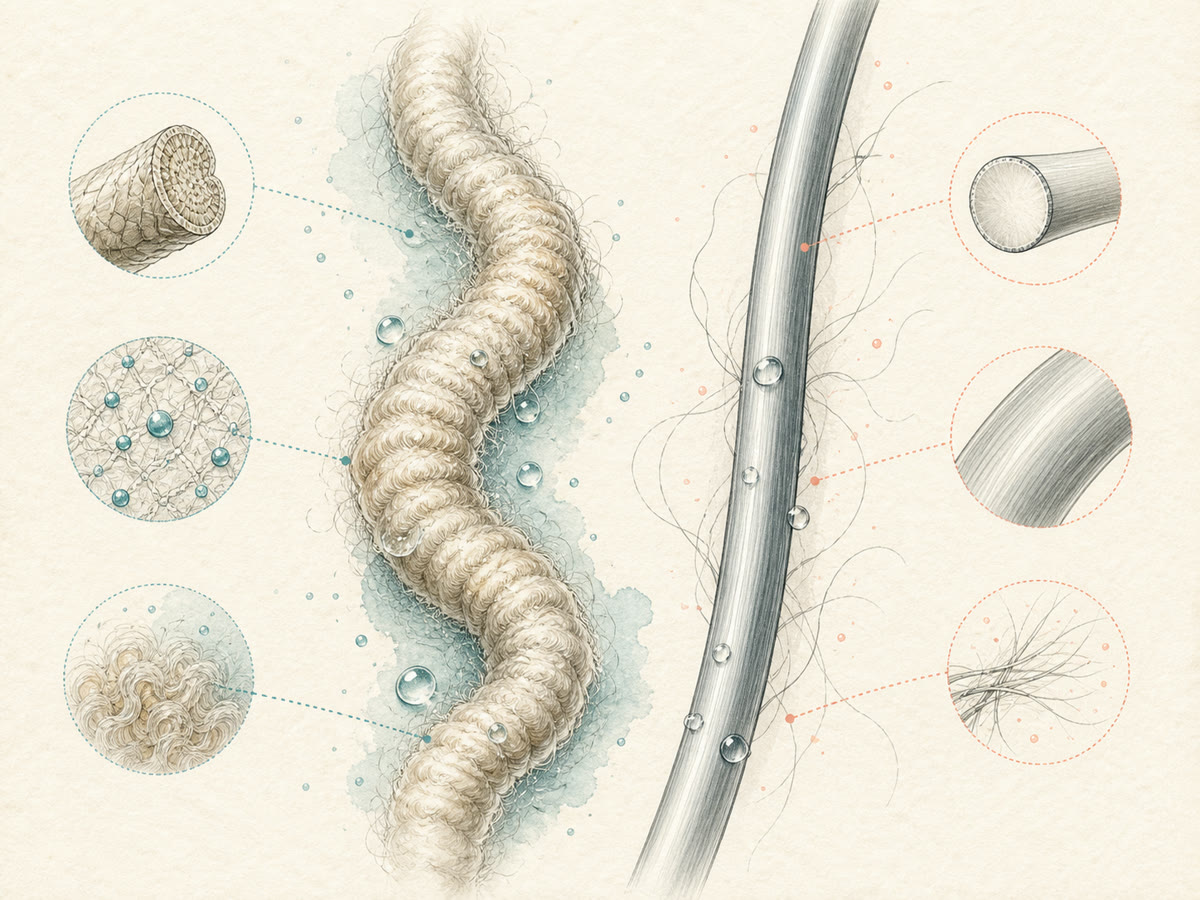
Wool fibres have natural waviness called crimp. The structure helps fibres trap pockets of still air and lets them extend and recover, contributing to insulation, resilience, and loft. The outer cuticle has overlapping scales; the interior contains regions that contribute different mechanical and moisture-handling properties.
Moisture changes electrical behaviour
Wool is hygroscopic: it can take up water vapour within the fibre. Moisture generally increases electrical conductivity and helps charge dissipate, which is one reason wool often produces less static than low-moisture synthetic fibres under ordinary conditions. That is not an absolute rule. In very dry air, wool is a poor electrical conductor and friction can still build substantial charge. Blends, finishes, contact materials, humidity, and motion all affect what you experience.
Practical implications for making
Let yarn acclimatise before judging its feel or winding behaviour. If dry-weather static makes loose fibres difficult to control, first reduce friction and review room humidity rather than wetting a valuable project directly. Follow the yarn maker’s care instructions: moisture absorption inside a fibre is not permission to soak or heat every wool construction.