Guide
Knitting decreases: direction is part of the design
Learn how right-leaning, left-leaning, and centred decreases shape edges and motif lines.
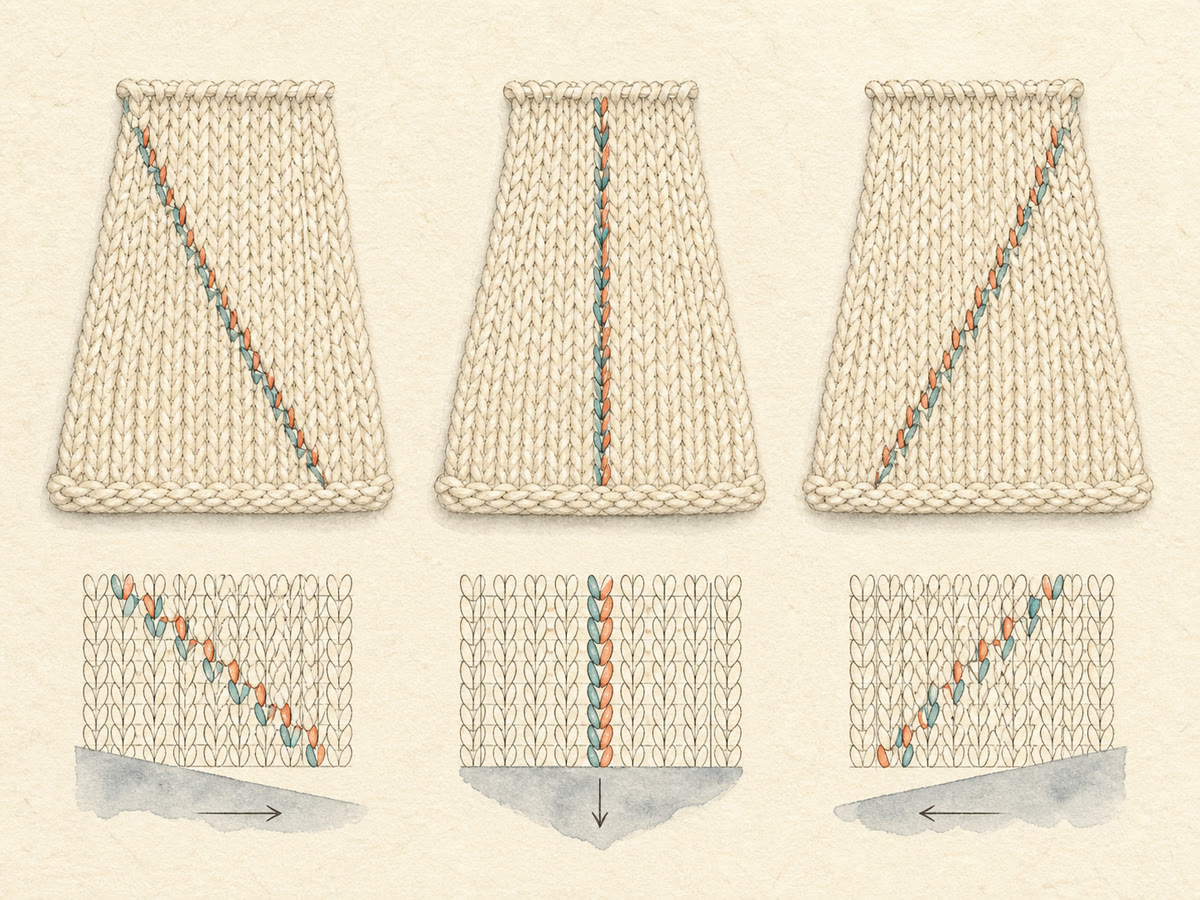
A decrease has a visible direction
A decrease changes both stitch count and the path of the remaining columns. Knitting two stitches together through their front loops (k2tog) creates a right-leaning decrease; slip-slip-knit (SSK) creates a left-leaning decrease. A centred double decrease removes two stitches around a central column. Pattern symbols and special instructions take priority because designers can define variants.
Pair decreases deliberately
Mirrored shaping can frame a neckline, raglan, or lace motif. Decide whether the visible lines should point toward the opening or away from it, then place the decrease far enough from the edge for any seam or border. Work a small swatch when the decrease crosses colourwork or texture: the mathematically correct stitch count does not guarantee the intended visual line.
Read the chart and the fabric
Chart symbols usually show the intended result rather than every hand movement. Confirm the symbol key, the right-side and wrong-side conventions, and whether one or two stitches are removed. Use the interactive comparison below to isolate the lean, then compare it with the actual fabric as you work.
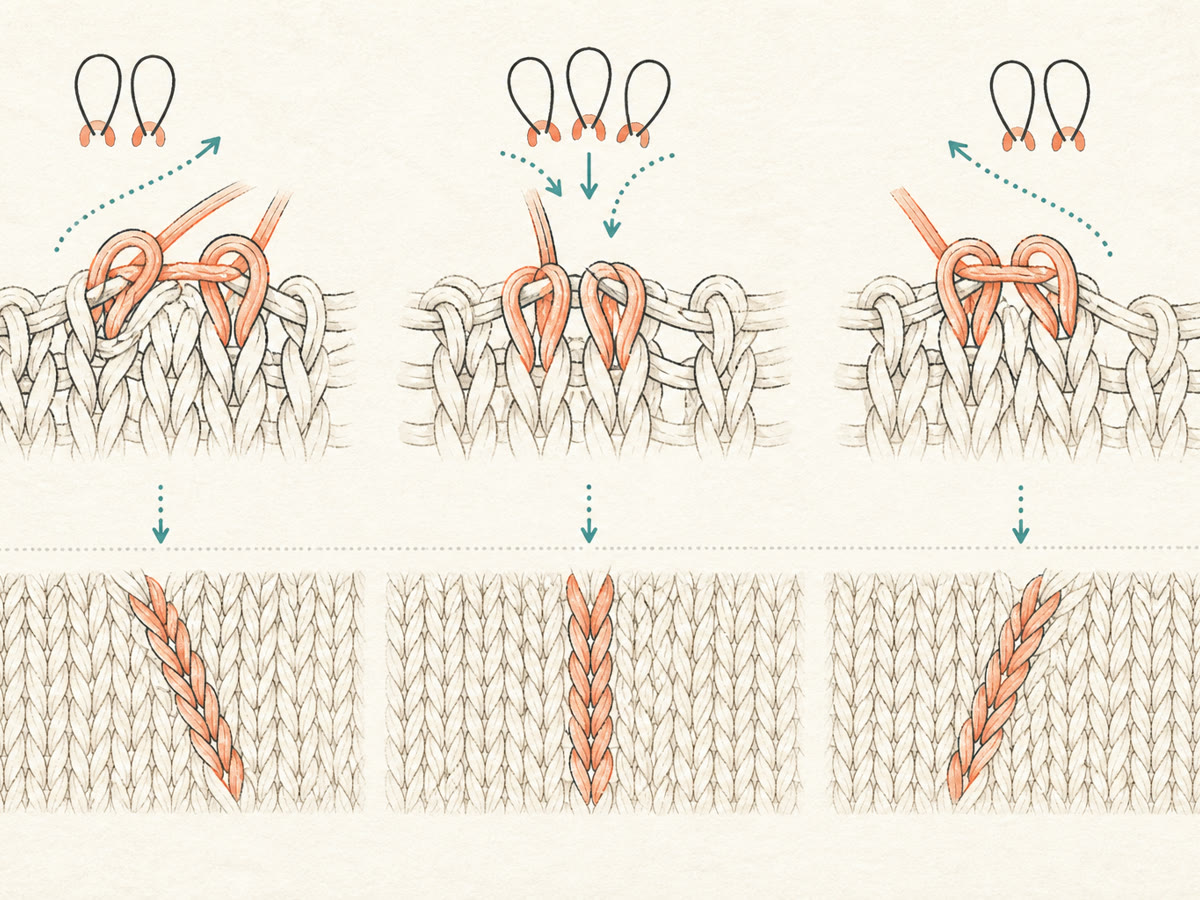
Interactive figure
Watch decrease direction shape an edge
Compare common decreases by the visible lean they create in the fabric.